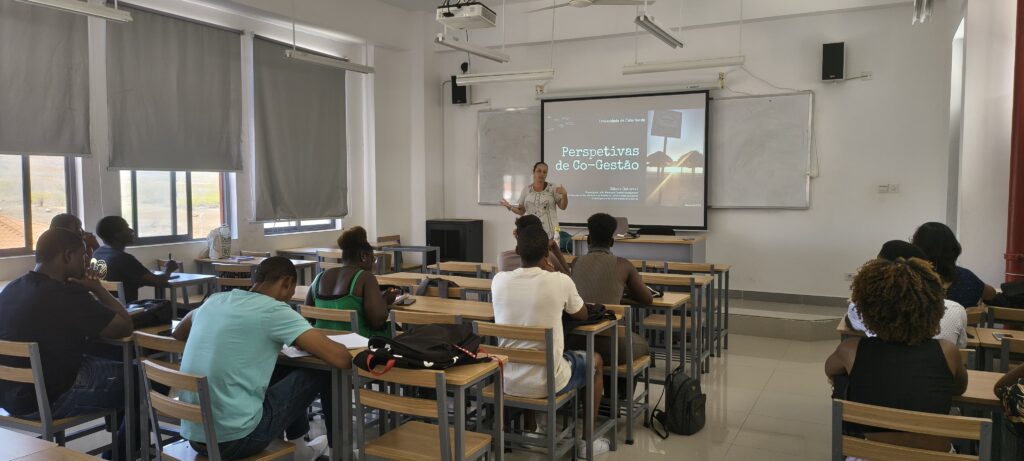
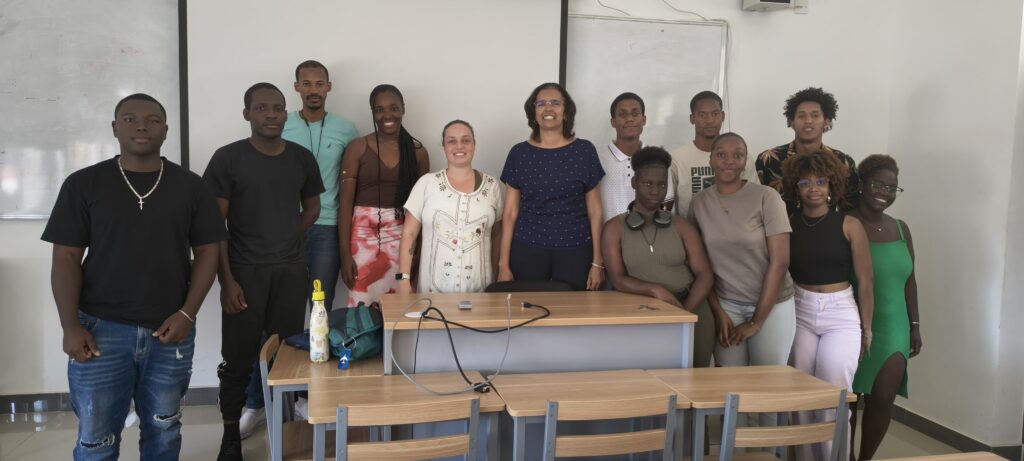
As part of the Erasmus+ programme, Débora Gutierrez, Macaronesia Demo Site lead and researcher at UAc, together with Professor Helena Calado, participated as invited lecturers in the Environmental Engineering course at the University of Cabo Verde. The sessions took place between March 26 and April 9, on Santiago Island. During these lectures, key topics such as co-management models for marine resources were addressed, drawing on both academic experience and recent developments from the BLUE CONNECT project. The sessions highlighted the importance of participatory approaches tailored to local contexts in achieving sustainable marine ecosystem management.
This initiative provided a valuable platform for dialogue with students and future environmental professionals, fostering the exchange of knowledge and strengthening capacities in ocean governance and marine conservation. It also reflects the University of the Azores’ strong commitment to internationalisation and to building collaborative solutions for global ocean challenges.
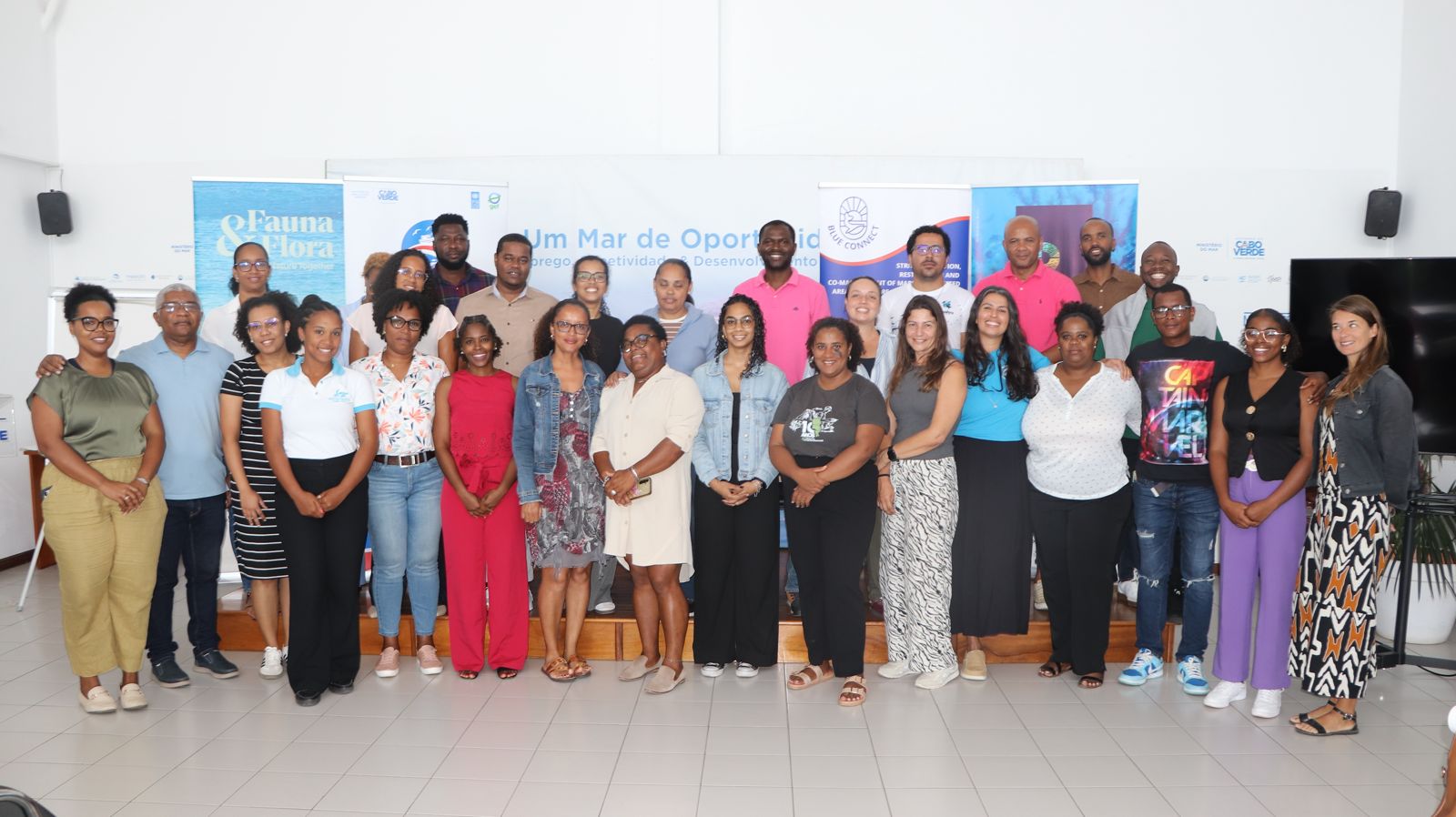
Following the Erasmus+ activities, Débora Gutierrez and Helena Calado travelled to Mindelo, on São Vicente Island, where they acted as trainers in an intensive three-day capacity-building programme for Marine Protected Area (MPA) managers, held from April 7 to 9 under the BLUE CONNECT framework. This training was jointly organised by Fundação Maio Biodiversidade (project partner), Fauna & Flora, Blue Action Fund, Arcadia, Oceans 5, and the projects “PAMAR – Fortalecer a Conservação Marinha em Cabo Verde” and “Gestão de Ameaças nos Ecossistemas Marinhos”, with the support of the Government of Cabo Verde and UNDP.
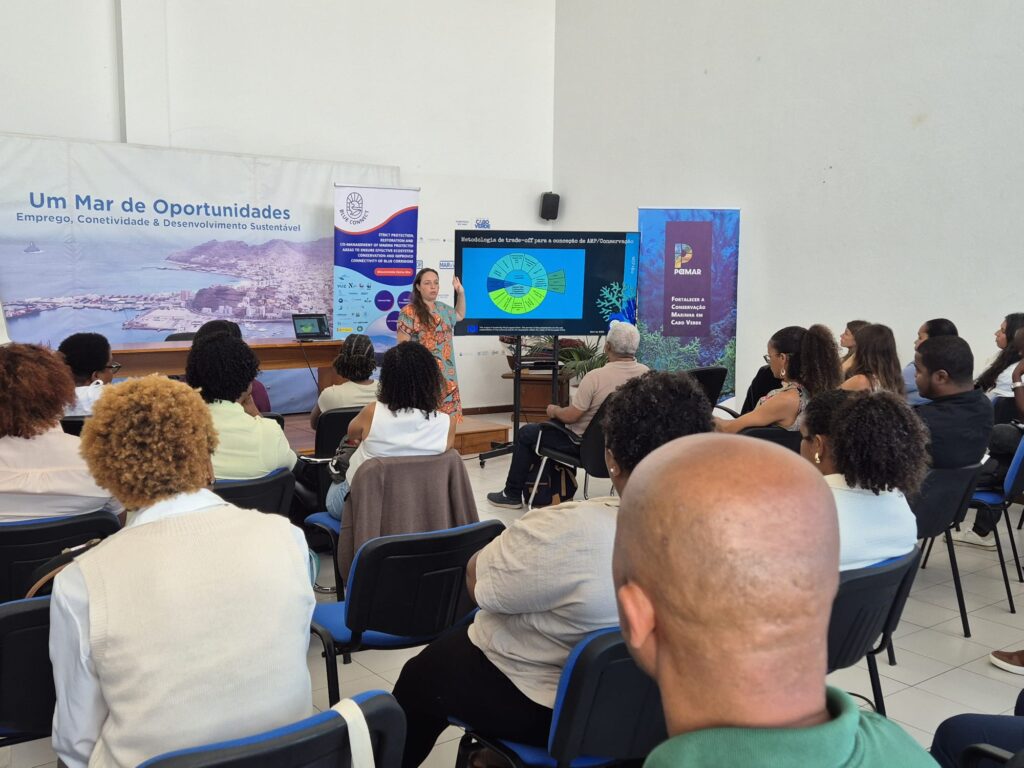
The training programme focused on two initial modules: MPA Governance and Strategy and Planning and Implementation, and is part of a broader capacity-building pathway that will continue until September 2026. Future modules will address Legislation and Regulations, Ecology and Biodiversity, Communication and Public Engagement, and Financial Management of MPAs.
This initiative is closely aligned with the objectives of the BLUE CONNECT project in Macaronesia, promoting the dissemination of knowledge and hands-on training for practitioners and stakeholders working directly in the field. By strengthening capacities and fostering collaboration among institutions and local actors, it contributes to reinforcing the network of Marine Protected Areas across the region.
Additionally, several meetings with local partners and institutions took place, including Direção Nacional do Ambiente (DNA), Instituto do Mar (IMAR), Ocean Science Center Mindelo (OSCM), and key NGOs, strengthening collaboration, exchanging knowledge, and exploring opportunities for future joint actions within the Blue Connect framework.
Importantly, this process reflects the understanding that co-management is continuous and evolving, requiring ongoing dialogue, adaptive learning, and shared responsibility among stakeholders. Through these efforts, BLUE CONNECT continues to support more inclusive, effective, and sustainable governance models for marine ecosystems.