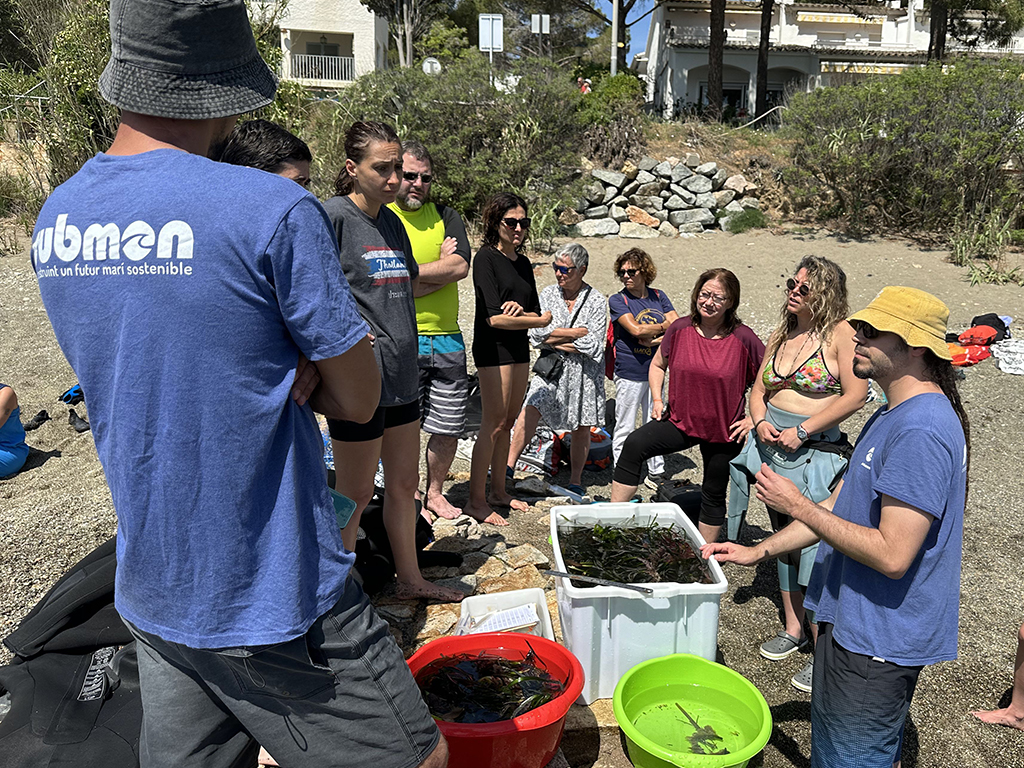
On Sunday 26 April, SUBMON organised a volunteer activity at Canyelles beach in Llançà as part of the European project BLUE CONNECT. The session focused on collecting detached Posidonia oceanica shoots that had been dislodged from the seabed by storms and were drifting close to the shore.
Around thirty volunteers took part in the activity, which combined hands-on conservation work with environmental awareness. The day began with an introductory talk by an environmental educator from L’Albera Natural Site of National Interest, who presented the main characteristics of the local environment and the ecological value of this area of the Costa Brava.
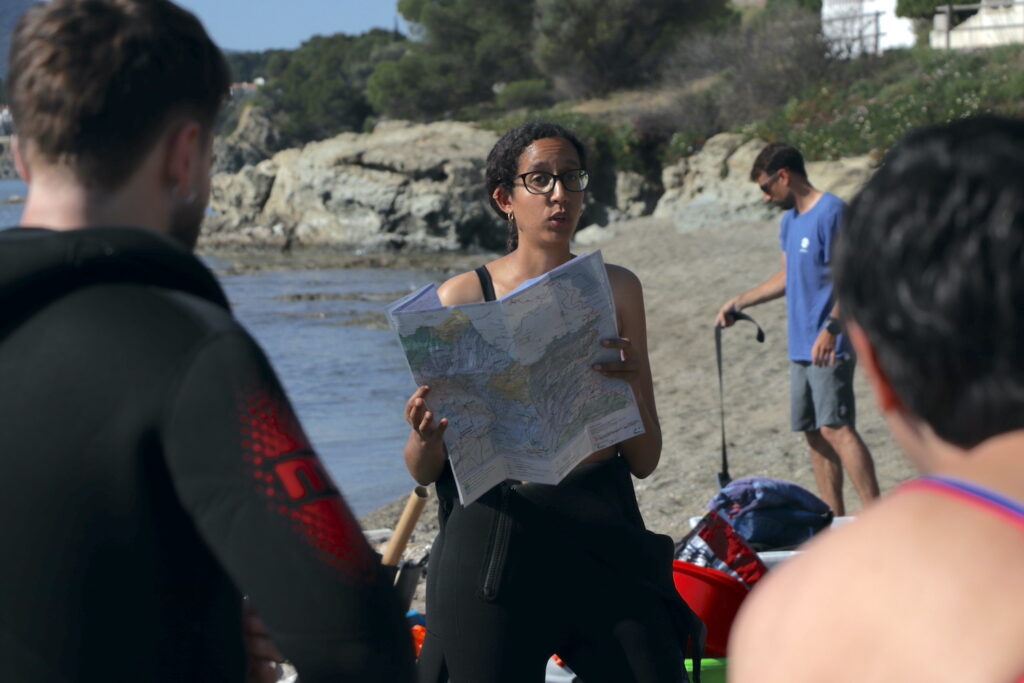
SUBMON’s team then introduced the volunteers to Posidonia oceanica, explaining why this marine plant is so important for Mediterranean coastal ecosystems. Its meadows play several key ecological roles: they provide habitat and shelter for many marine species, help oxygenate the water, store carbon in the sediment and reduce the force of waves, contributing to the natural protection of the coastline.
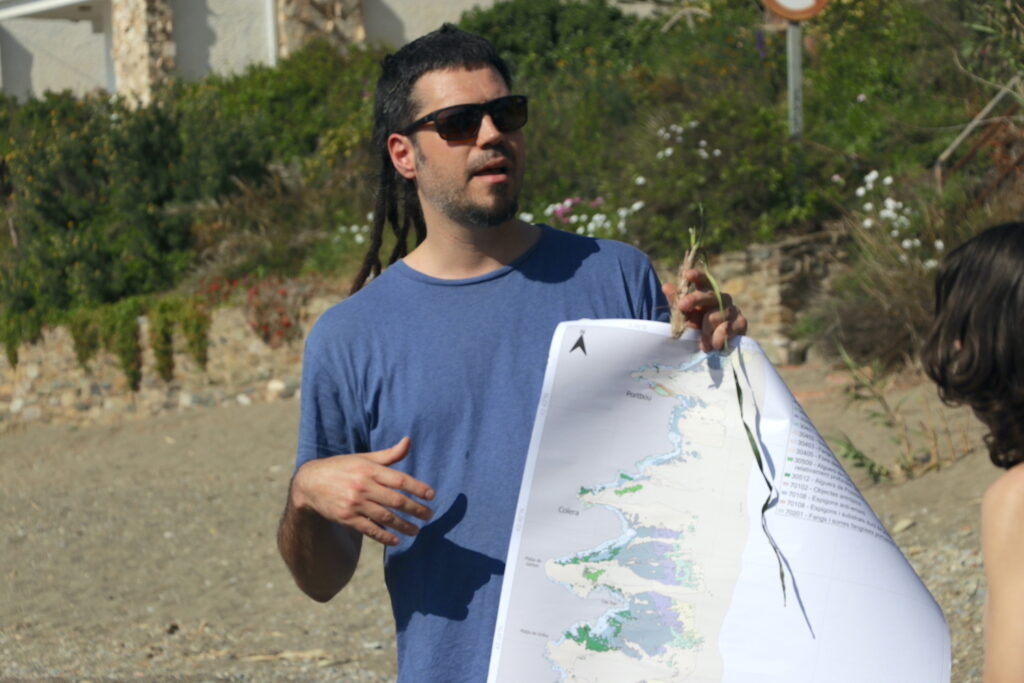
Collecting detached Posidonia oceanica shoots
After the introductory briefing, where volunteers were given guidance on which Posidonia oceanica shoots should be collected, they entered the water equipped with wetsuits, masks and snorkels to locate and collect detached shoots. These shoots had been dislodged from the seabed by the force of storms and had remained adrift in the water.
The team had initially planned to recover a limited number of shoots suitable for replanting. However, during the activity, volunteers identified and collected several detached fragments close to the shore. Once brought ashore, the shoots were classified and categorised with the support of SUBMON’s team, following the criteria explained during the session.
This selection process is important because not all detached shoots can be replanted. The fragments have already experienced stress after being detached from the seabed and spending time adrift, so their condition must be assessed before any restoration action is carried out.
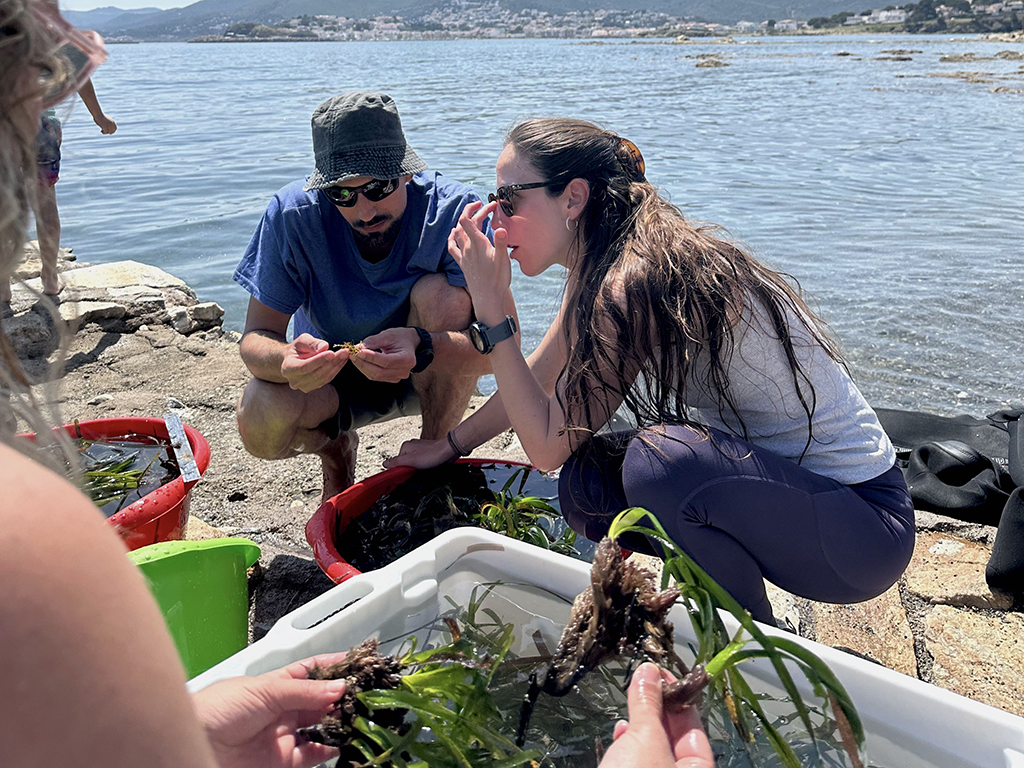
Replanting Posidonia oceanica: a slow and carefully monitored process
The following day, SUBMON team replanted the selected Posidonia oceanica shoots, without volunteer participation. This type of active restoration can only be carried out by authorised organisations and requires specific technical criteria, appropriate permits and long-term monitoring.
The objective of the replantation is to give suitable detached shoots the opportunity to potentially take root again, survive, grow and expand horizontally. However, this is a complex and slow process. Posidonia oceanica is a slow-growing species, and the shoots collected had already undergone stress before being replanted.
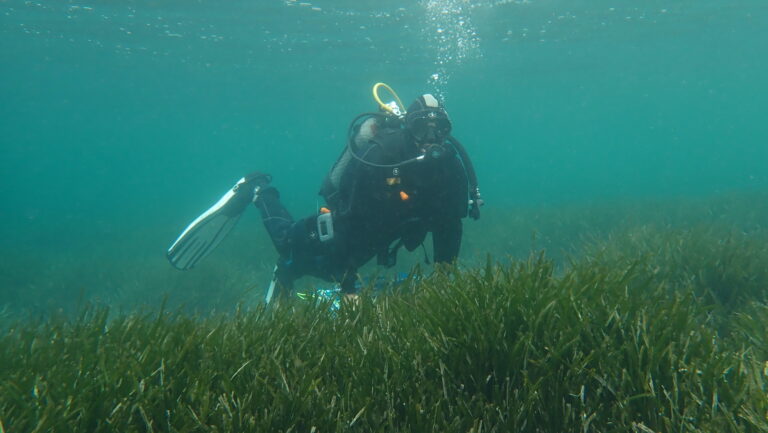
For this reason, the results of the intervention cannot be assessed immediately. Monitoring over the coming years will be needed to determine whether the replanted shoots are able to survive and root successfully. In the case of Posidonia oceanica, restoration is measured over long timeframes, and it may take several years to properly evaluate its success.
This is why the protection of existing meadows remains essential. Active restoration can help to accelerate natural recovery in specific areas and cases, but passive restoration, in terms of preventing further damage and reducing pressures on Posidonia oceanica habitats is key to conserving this slow-growing and highly valuable marine plant.
Why Posidonia oceanica matters for L’Albera and the Mediterranean coast
Posidonia oceanica is an endemic Mediterranean marine plant that forms extensive underwater meadows that are one of the most important habitats in the region’s coastal areas. Posidonia beds support biodiversity, improve water quality, store carbon and help to protect the shoreline from erosion.
In L’Albera, this habitat is especially relevant because of the ecological values that it provides. Its preservation contributes to healthier coastal ecosystems and supports wider efforts to improve the protection and management of the northernmost area of the Costa Brava.