A hidden habitat worth knowing
Seagrasses are often mistaken for seaweed. But in fact, they are flowering plants, rooted in the sandy seabed of shallow coastal waters, and they do a remarkable amount of work. Their meadows shelter young fish and other marine life, hold sediment in place, help keep the water clear and store carbon. Across Europe, these habitats are under pressure from pollution, coastal development and physical damage. And because they grow out of sight, their loss often goes unnoticed.
From a stakeholder meeting to a permanent exhibition
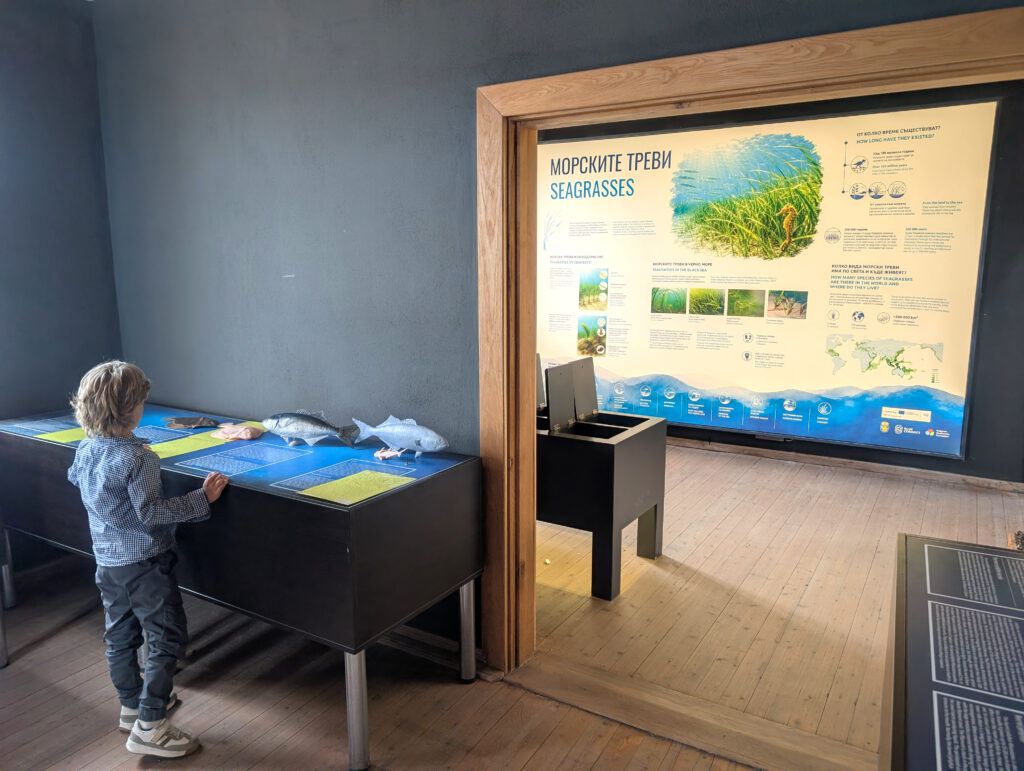
What began as an idea at the second BLUE CONNECT stakeholder meeting in Burgas Bay quickly gained momentum. It soon grew into a partnership between the Bulgarian Biodiversity Foundation, the Burgas Regional Tourism Association and Burgas Municipality who wanted to permanently bring seagrass to the surface for people to explore and learn.
Each partner brought something different. The Bulgarian Biodiversity Foundation developed the concept and content as part of its work within BLUE CONNECT. The Burgas Regional Tourism Association, through the BLUE CONNECT project, supported the development and installation of the exhibition. Burgas Municipality gave it a permanent home on St. Anastasia Island.
This is what can happen when conservation experts, the tourism sector and local government sit at the same table and look for common ground.

Why ocean literacy matters
People protect what they understand. Decisions about how we use and care for the sea, from fishing and tourism to marine protected areas, rely on public awareness and support. When people know what lives beneath the surface, and why it matters, they are more likely to value it, speak up for it and look after it in their everyday lives. This is the concept of ocean literacy.
In Bulgaria, that understanding of our ocean is still developing. Much of what we know about the Black Sea stays within research institutes and expert circles. Exhibitions like this one will help change that by bringing marine knowledge to families, students, tourists and residents, in a place they are already visiting.
The right place at the right time
St. Anastasia Island is one of the most visited attractions in Burgas. And in 2027, the city will host the Eurovision Song Contest, which is expected to bring thousands of international visitors. That opens the door to a much wider audience. For many of them, this will be a first introduction to the Black Sea and its natural heritage.
So next time you are in Burgas, take the boat to St. Anastasia Island and see what lies beneath the waves!