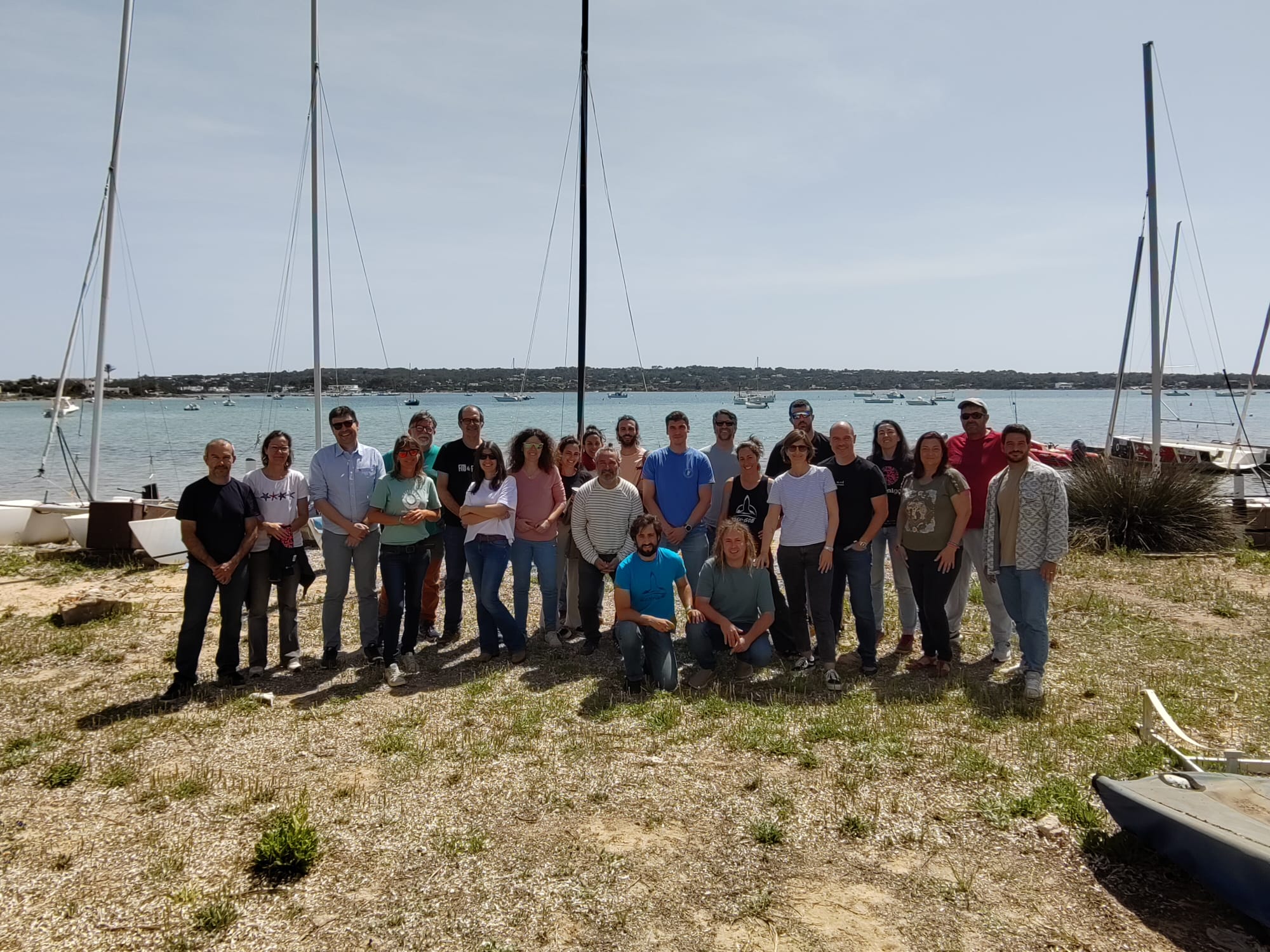

On 22 April, the Escola de Vela de Formentera hosted the 5th Marine Stewardship Board, a meeting that once again brought together public authorities, researchers, representatives of the fisheries sector, environmental organisations, businesses and social stakeholders to jointly address some of the main challenges facing marine conservation in the Pitiusas Islands. The day provided an opportunity to share progress, compare approaches and strengthen coordination. The actors involved carry different responsibilities and perspectives, but share a common concern: protecting the coastline and marine biodiversity.
The programme focused on several priority areas of work. These included ecological restoration initiatives for benthic communities linked to the CABALGA project, progress in monitoring and mitigating the accidental capture of seabirds in the Balearic Islands, proposals aimed at the conservation of elasmobranchs through the reduction of bycatch, and the promotion of sustainable tourism and support for alternative fishing practices. The event also addressed good practices for nature tourism businesses operating in Natura 2000 sites and provided space to share initiatives emerging from the fisheries working group and from the group on recreational and tourism uses and capacity building. The meeting reflected the approach at the heart of BLUE CONNECT: coordinating across sectors to define marine conservation priorities for the Pitiusas Islands together.

Attendance reflected the cross-cutting nature of this board. Representatives from the Balearic Government, the Island Council of Formentera, the Biodiversity Foundation and Spain’s Ministry for the Ecological Transition (MITECO) took part, alongside researchers and technical specialists linked to ICM-CSIC, COB-IEO and various research and conservation initiatives. Environmental organisations such as SEO/BirdLife, WWF, Marilles and GOB Formentera, were also present, as well as the Fishermen’s Guild of Formentera, business associations, the Chamber of Commerce, tourism and nautical companies, diving centres and other local stakeholders directly connected to the use and care of the sea.
The fifth board meeting highlights that the active and coordinated participation of all sectors is essential to strengthen marine governance in Formentera and to move collectively towards achieving good environmental status in the marine environment. Spaces like this are key to building consensus, sharing knowledge and turning cooperation between public administrations, productive sectors, the scientific community and civil society into concrete decisions and actions for the future of the sea.