Sharks and rays are among the most vulnerable marine species in the Mediterranean. Many grow slowly and produce few young, so every accidental catch counts. This raises a practical question for marine conservation: if much of the pressure comes from bycatch, who is best placed to reduce it?
In Formentera, part of the answer is the fishers themselves.
Knowledge that does not show up in datasets
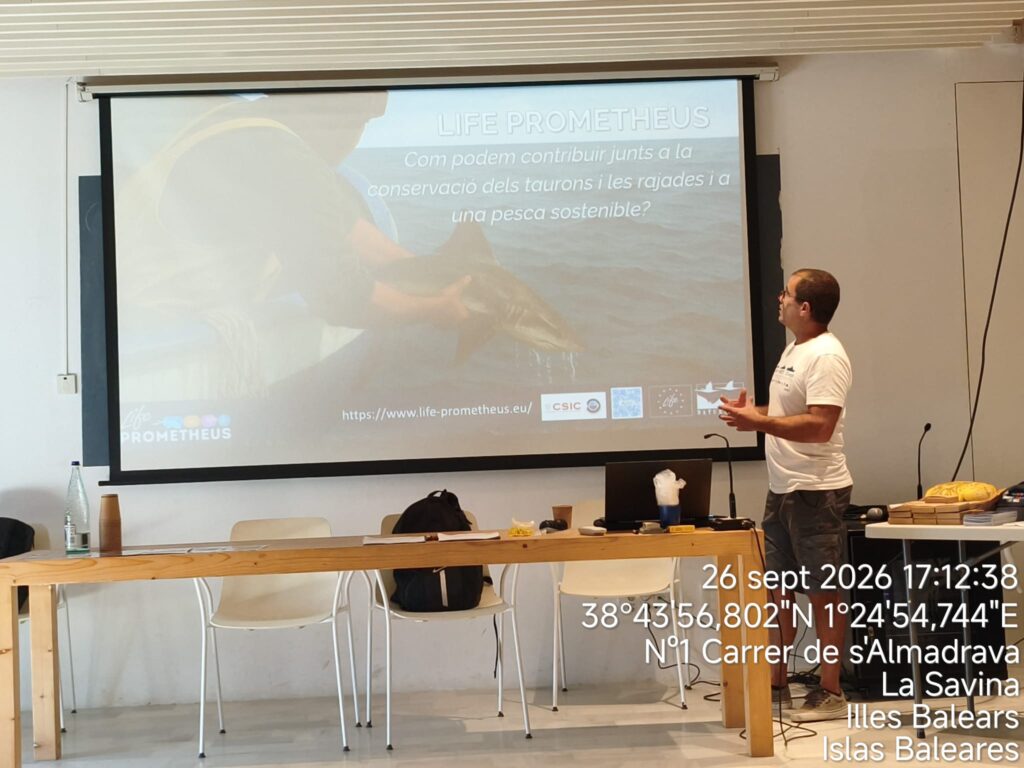
Small-scale fishers know where and when sharks and rays turn up, how their gear behaves and which changes are realistic on a working boat. They can also test new measures in real conditions, which is where many good ideas succeed or fail. The LIFE PROMETHEUS project is working on exactly this around Formentera. It is assessing ways to reduce bycatch, including magnetic deterrent technologies, while keeping local small-scale fisheries viable.
Where governance makes the difference
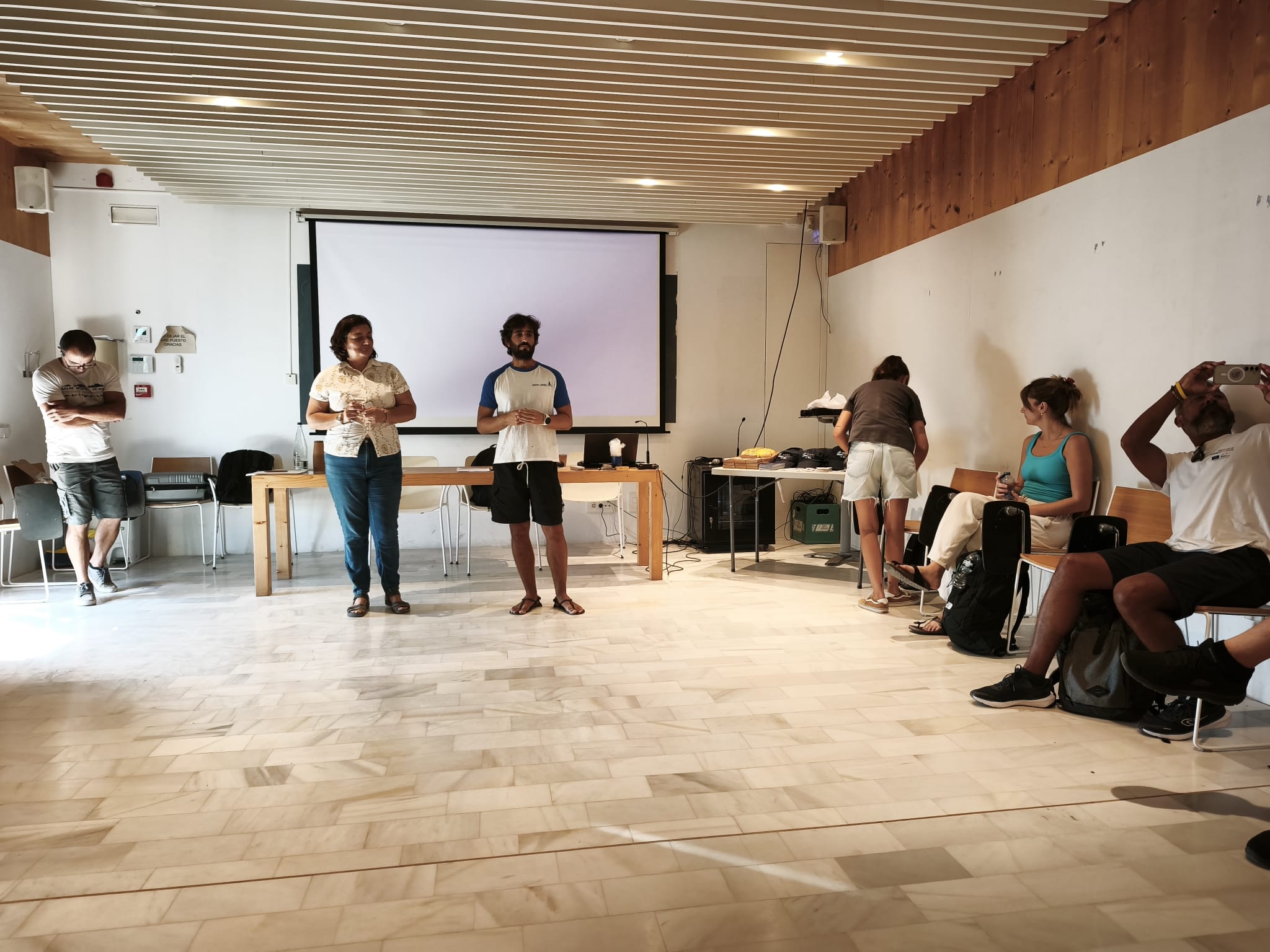
A bycatch-reduction device only works if people are willing to use it. That is why the way decisions are made matters as much as the technology and this is where BLUE CONNECT comes in. The Pitiusas area is one of BLUE CONNECT’s Demonstration Sites, where the project tests participatory approaches to MPA management on the ground. The Marine Stewardship Board of Formentera brings fishers, scientists, conservation practitioners and local authorities together to work on shared problems. At a recent workshop, fishers and project partners exchanged knowledge on the pressures facing Mediterranean fisheries and on how fishers can help collect data, trial new measures and shape long-term management.
This is where BLUE CONNECT adds value. It provides a lasting space for dialogue, so that work started under LIFE PROMETHEUS can take root in local decision-making instead of ending when the trials do. For BLUE CONNECT, Formentera shows that participatory governance is not an extra step on top of conservation. It is often what makes conservation work. Measures designed with the people they affect have a better chance of being understood, accepted and kept up.
From dialogue to implementation
Good governance also needs resources. At the 4th Pitiusas Local Stakeholder Working Group Meeting, stakeholders will review the tools produced within the draft MPA Financing guideline (D4.2). These tools aim to help MPA managers and stakeholders to self-organize, assess pre-conditions, and better understand how to access diverse financing mechanisms for conservation activities within their protected areas.