As part of the European Blue Connect project, ETC-UMA will support the Ministry of the Ecological Transition and Demographic Challenge, associated partner, to strengthen conservation efforts within the MPA. Through research, innovative monitoring technologies, and stakeholder dialogue, the project aims to ensure the long-term sustainability of marine biodiversity in this vital region.
Why this Corridor matters
The Cetacean Migration Corridor MPA covers an area roughly the size of Switzerland, making it the second largest MPA in the Mediterranean Sea after the Pelagos Sanctuary. This designation aims to preserve and protect marine biodiversity, particularly for species that rely on the corridor for seasonal migrations between breeding and feeding grounds, as the Pelagos Sanctuary.
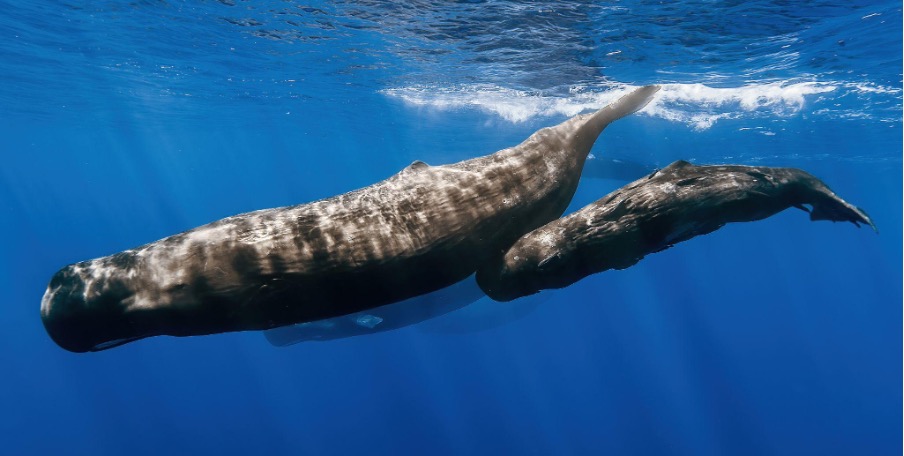
One of the most notable species found in this corridor is the fin whale (Balaenoptera physalus), the second-largest whale species in the world. These majestic creatures are known to migrate between summer feeding grounds in the Corso-Ligurian Basin and possible wintering areas off southern Spain and North Africa. Some also travel through the Balearic Sea in spring, reaching the Strait of Gibraltar, crossing into the Atlantic from May to October, and returning between November and March.
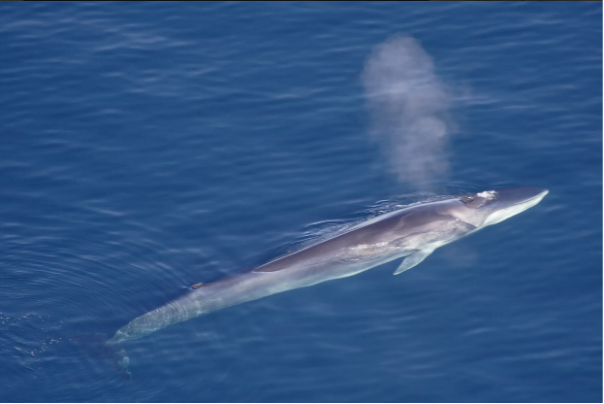
.
Threats facing the species that use and live in the Corridor
Despite its protected status, the Cetacean Migration Corridor faces numerous threats that endanger its delicate ecosystem. The Mediterranean is one of the busiest seas in the world, and heavy maritime traffic and other marine activities generate significant noise. Increased vessel activity generates underwater noise that interferes with their communication, navigation, and foraging behavior. Additionally, heavy shipping traffic increases the risk of collisions, which can cause severe injuries or fatalities.
The possible reduction of food available together with the presence of microplastics and nano-plastics in the water poses serious ingestion hazards for marine species. Additionally, some dolphins and turtles can get accidentally caught in fishing nets, leading to injury or death.
What we are doing
The work within Blue Connect will help to co-create a management plan for the area with all stakeholders. The scientific research will advance the knowledge on how the species use the Corridor and other areas, especially the Pelagos Sanctuary, another important protected area for cetaceans in the Western Mediterranean. It will also be investigated how pressures are impacting these species now and potentially in the future, and how effective different measures could be in reducing those pressures. The aim is also to provide recommendations for the management, and monitoring as well as assessment tools.

.
A shared responsibility for ocean conservation
The tools and guidelines developed by ETC-UMA with other partners as part of this project will be useful for other protected areas that aim to conserve cetaceans and other species that travel large distances. The protection of the Cetacean Migration Corridor is not just a regional effort but part of a larger global movement to preserve marine biodiversity by establishing well-connected MPA networks. Similar migration routes exist across the world, each facing comparable threats from human activities. The challenges in the Mediterranean mirror those in other seas and oceans, underscoring the need for international cooperation in marine conservation. The survival of these species depends on sustained action, science based conservation, and a collective commitment to protecting our oceans.
Photos
- Photo 1: Gabriel Barathieu
- Photo 2: Aqqa Rosing-Asvid
- Photo 3: Safari Travel Plus